For global buyers, a Modern Wood Coffee Table is more than a decorative centerpiece. It combines practical function, natural texture, and contemporary design in one visible product. A well-made table can anchor a living room, hotel lounge, or serviced apartment. Its surface may show open grain, subtle knots, and warm color changes. These details create character, not manufacturing defects.
George Nakashima, the respected American-Japanese architect and woodworker, wrote, “The tree is not a commodity. It is a living thing.” His observation remains important for today’s furniture buyers. Responsible manufacturers should explain the wood species, moisture control, finish, and origin. Buyers should also request clear product dimensions, packaging details, and quality inspection records. These documents support reliable decisions across different markets.
A Modern Wood Coffee Table should fit real daily use. Consider a tabletop around 45 to 60 centimeters high, depending on the sofa design. Check the edge treatment, leg stability, load capacity, and resistance to ordinary spills. Sustainable wood certifications may add credibility, but certification claims must be verified. Not every natural-looking table is responsibly produced.
There is no perfect piece of wood. Small variations are unavoidable. Sometimes, a photograph looks better than the delivered product. That risk deserves honest discussion. Experienced suppliers should provide close-up images, finish samples, and replacement policies. This approach builds trust without exaggeration. For international buyers, the strongest choice balances visual appeal, practical durability, ethical sourcing, and dependable after-sales support.
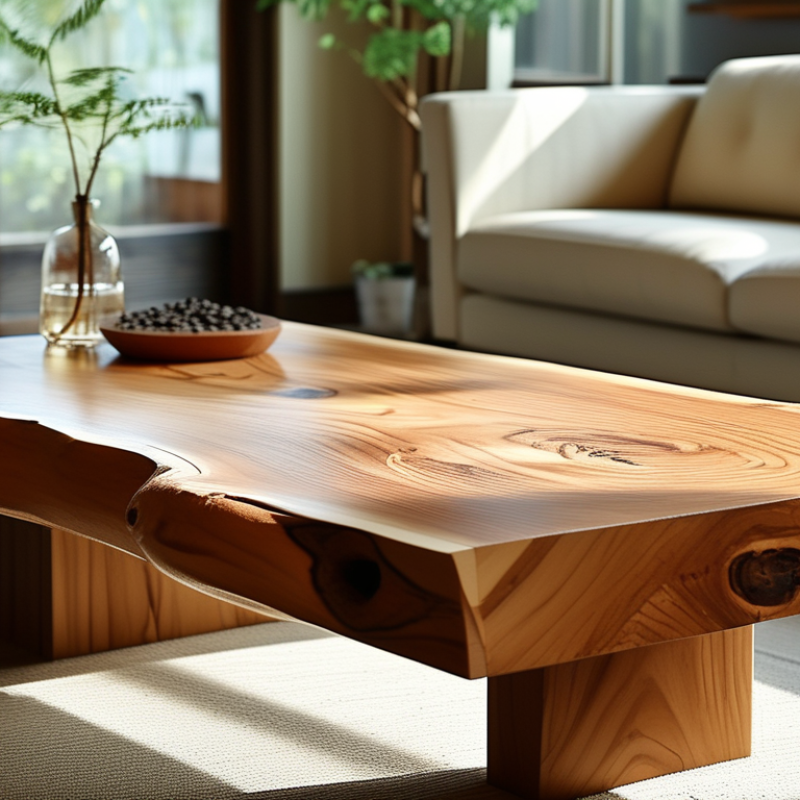
A modern wood coffee table combines practical structure with a clean, current appearance.
Its design usually features simple lines, balanced proportions, and limited decoration. Yet minimal does not mean plain. A softly rounded edge, visible grain, or recessed shelf can add character without visual clutter. In my experience, buyers notice stability before style. A well-made table should sit firmly on level flooring and resist minor movement during daily use. Hardwoods, engineered wood, and responsibly sourced timber can all perform well when properly selected. The key is matching the material to the room, climate, and expected use. This point is often overlooked.
Construction details define quality. Even joints, smooth sanding, and a durable finish help the table handle cups, books, and occasional spills. Moisture resistance matters in humid regions, but no wood surface is completely careless-proof. I once underestimated how quickly a pale finish showed water rings. That mistake changed my buying checklist. I now examine finish samples under direct light and ask about maintenance instructions. Dimensions also deserve attention: a low table may suit a lounge sofa, while a narrow room needs open clearance around its legs. Packaging, assembly hardware, and accurate measurements influence the experience for international buyers. Modern style is not only about appearance; it is also about dependable use, honest material information, and details that remain useful after the first impression.
Global buyers often prefer modern wood coffee tables because they balance warmth, clean lines, and daily practicality. In apartments, hotels, and family rooms, wood softens hard surfaces without making spaces feel crowded. From product evaluations, I have found that buyers inspect more than appearance. They check grain consistency, edge safety, surface finish, and actual weight. A compact table with rounded corners may suit a small city apartment better than a larger design with sharp angles.
Small details matter.
Solid wood can offer long service life, but construction quality matters more than the word “solid.” Look for stable joints, properly dried timber, and a finish suited to regular cleaning. Buyers in humid regions should ask about moisture movement and protective coatings. Those in dry climates should allow for minor seasonal changes. A wood table is not maintenance-free. Wipe spills promptly, use coasters, and avoid placing it beside intense heat. These habits protect the surface and reduce repair costs.
Modern wood designs also coordinate easily with international interiors. Natural oak tones and light finishes can match metal, stone, or fabric seating. Yet color may vary between samples and final production. That is easy to overlook. Responsible sellers should provide material details, dimensions, care instructions, packaging information, and quality checks. Buyers should review these details before ordering, especially when shipping across borders. Style attracts attention, but transparent specifications build trust.
Why Choose a Modern Wood Coffee Table for Global Buyers?
Material selection strongly affects a coffee table’s strength, appearance, and service life. Solid hardwood usually offers rich grain and dependable durability. Engineered wood can provide stability and efficient use of resources. However, quality depends on its core, thickness, and construction. A beautiful surface cannot hide weak internal layers.
Moisture content also matters. Wood that is too wet may warp after shipment or seasonal changes. Buyers should request clear material details, testing information, and care instructions. During inspections, I look closely at the tabletop edges, corners, and underside. These areas often reveal rushed sanding or uneven finishing. No table is flawless. Even skilled workshops can miss a small rough spot.
Tips: Check the wood type, panel thickness, moisture control, and finish safety. Examine joints before judging the color. Dovetail or reinforced connections often support long-term stability. A slight natural variation is acceptable. Loose joints are not. Ask for photos of the actual production piece, not only polished samples. Packaging also deserves attention, especially for international delivery. Protective corners, dry wrapping, and firm internal supports can reduce damage. Craftsmanship is visible in small details: aligned legs, smooth edges, balanced proportions, and consistent grain direction. A modern design may look simple, but simple forms demand careful measurement. Sometimes, a lower-priced table seems attractive. The hidden compromise may appear months later.
Modern wood coffee tables are not one global product. Grand View Research valued the global furniture market at approximately US$516.7 billion in 2022. It also projects a 5.2% compound annual growth rate through 2030. That expansion favors adaptable designs. In compact urban homes, choose 80–100 cm round or oval tables. They improve movement and reduce sharp corners. Larger rooms suit 110–130 cm rectangular tables. Keep about 45 cm between the sofa and table.
Urban demand will remain important. UN DESA projects that 68% of the world’s population may live in cities by 2050. Flat-pack construction, lighter frames, and adjustable feet can simplify delivery and installation. Warm oak tones fit bright, minimalist interiors. Darker walnut colors may suit richer, more traditional rooms. Preferences still vary widely. A simple assumption can fail.
For humid markets, use kiln-dried timber, sealed surfaces, and corrosion-resistant hardware. Families may value rounded edges, stain resistance, and easy cleaning. Buyers in smaller apartments often prefer nesting tables or lift-top storage. A 90 cm table may feel generous in one market but undersized elsewhere. Offer both metric and imperial dimensions. The 2024 Global Sustainability Study by NielsenIQ reported that many consumers consider sustainability when purchasing, so provide clear wood-origin documentation and durable repairable parts. I would avoid claiming every “eco” finish is harmless. Testing and transparent specifications matter.
Importing a modern wood coffee table begins with the material, not the appearance. Ask for the exact wood species, moisture range, and construction method. Solid wood, veneer, and engineered panels behave differently during transport. Request recent production photos and a physical sample. A digital image can hide uneven grain, weak joints, or a glossy finish that looks cheaper in person.
Measure more than the tabletop. Check leg height, carton dimensions, net weight, and assembled volume. These details affect warehouse storage and shipping costs. Confirm that the table fits standard room layouts in your target market. A low table may look elegant, yet some customers may find it uncomfortable. That detail is easy to overlook. It deserves testing.
Packaging needs careful inspection. Look for corner protection, moisture barriers, internal supports, and clear assembly instructions. Ask whether the packaging uses suitable treated wood materials where required by the destination. Request drop-test records when available, but inspect the method behind the report. A test may not reflect long-distance handling. Finish consistency also matters. Ask about scratch resistance, odor after opening, and cleaning instructions. Keep quality tolerances in writing, including acceptable color variation and small knots. Perfection is unrealistic with natural wood. Still, vague standards create expensive arguments. A pre-shipment inspection can reveal problems before the container leaves.
: It combines clean lines, balanced proportions, and practical construction. Visible grain or a rounded edge can add warmth without clutter.
Choose an 80–100 cm round or oval table. It leaves more walking space and reduces sharp corners. Measure twice.
A 110–130 cm rectangular table usually fits larger seating areas. Leave about 45 cm between the sofa and table.
Hardwood, engineered wood, and responsibly sourced timber can all work well. Quality depends on proper selection, construction, and finishing.
Check even joints, smooth sanding, stable legs, and accurate assembly holes. The table should resist minor movement on level flooring. Stability matters more than appearance.
Look for kiln-dried timber, sealed surfaces, and corrosion-resistant hardware. Moisture resistance helps, but no wooden surface is completely spill-proof.
Rounded edges, stain-resistant finishes, and easy-clean surfaces can help families. Nesting tables and lift-top storage may suit smaller apartments.
Confirm metric and imperial dimensions, package size, assembly hardware, and delivery requirements. Also check the space around the legs. A table can look perfect online but feel too large at home.
Request clear wood-origin information and details about repairable parts. Treat broad “eco” claims carefully. Testing and transparent specifications are more useful than attractive wording.
A Modern Wood Coffee Table combines clean lines, practical function, and the natural warmth of wood, making it suitable for contemporary homes, offices, hospitality spaces, and retail projects worldwide. Its quality is defined by the choice of timber, moisture control, surface treatment, joinery, and construction precision. Responsible material selection and careful craftsmanship can improve durability, stability, appearance, and long-term value, while also helping buyers meet different market expectations.
Global buyers can choose from minimalist, Scandinavian-inspired, industrial, rustic, or mixed-material designs, depending on local preferences and interior trends. Different room sizes may require compact, nesting, lift-top, storage, or adjustable options. Before importing, buyers should confirm dimensions, packaging strength, product specifications, finish consistency, quality standards, shipping terms, and documentation. Clear communication with suppliers and thorough sample inspection can reduce misunderstandings and support reliable purchasing decisions across different markets.

Union Home