Choosing China Top Vanity Table With Drawers Manufacturers requires more than comparing attractive catalog images. A reliable introduction should examine production experience, material knowledge, quality systems, and communication practices. These factors influence every detail, from drawer alignment to the smoothness of painted edges.
A well-made Vanity Table With Drawers should feel stable and practical. Its drawers should open quietly, close evenly, and support daily storage without sticking. Look closely at plywood thickness, hardware strength, surface finishing, and mirror safety. Small details matter.
Interior designer Emily Henderson once said, “The best rooms have something to say about the people who live in them.” Her observation also suits vanity furniture. A capable manufacturer should understand both personal style and everyday use. It should offer flexible finishes, sensible dimensions, and designs suited to different markets.
China has many experienced furniture producers. However, factory size alone does not prove dependable performance. Buyers should review sample quality, inspection records, production capacity, packaging methods, and customer feedback. Factory audits and clear specifications can reduce costly surprises.
Still, no supplier is perfect. A beautiful prototype may hide weak drawer runners or inconsistent color matching. That possibility deserves attention. My own preference may lean toward minimalist designs, yet family bedrooms often need deeper drawers and stronger surfaces.
The following guide introduces leading Vanity Table With Drawers manufacturers in China. It considers craftsmanship, customization, certifications, service, and long-term reliability. The goal is not to praise every supplier equally. It is to help buyers ask sharper questions and choose with greater confidence.
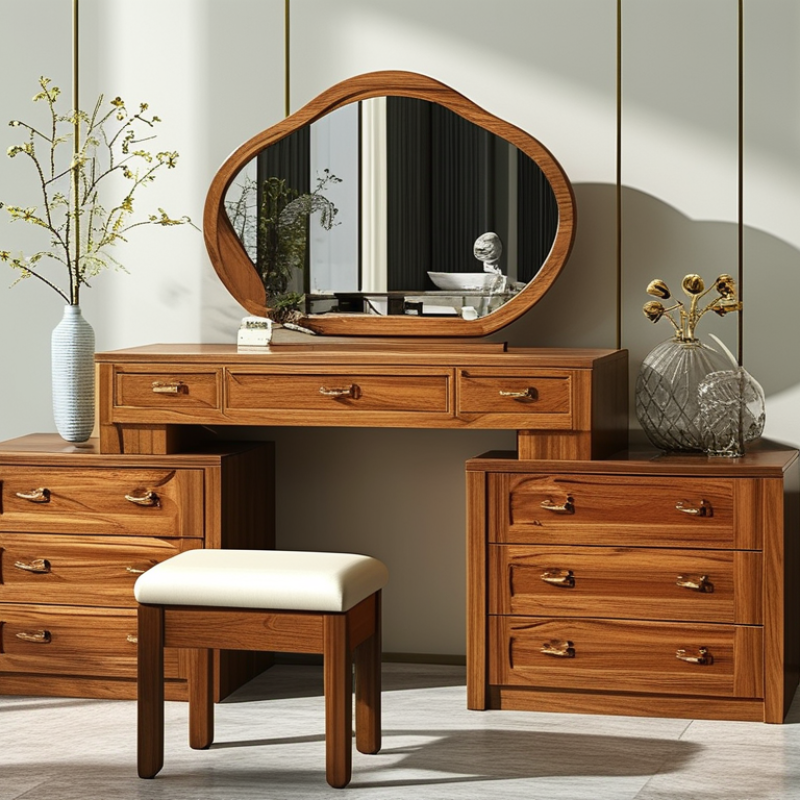
China Top Vanity Table With Drawers Manufacturers
Types of Vanity Tables With Drawers Made in China
Chinese manufacturers produce several practical vanity table designs with drawers. The compact single-drawer table suits bedrooms with limited floor space. It often includes a wide tabletop, slim legs, and a small mirror mount. The drawer stores brushes, jewelry, and daily skincare items. Some factories use engineered wood with melamine surfaces for consistent color and easier cleaning.
Multi-drawer vanity tables provide more organized storage. Their layouts may include three narrow drawers, two deep drawers, or mixed compartments. Deep drawers work well for hair tools and bottles. Shallow drawers are better for cosmetics and accessories. Corner vanity tables use angled designs to fit unused room areas. They can reduce wasted space, although their custom structure may increase production time.
Manufacturers also make modern tables with built-in mirrors and concealed drawers. LED lighting is commonly added around the mirror frame. Buyers should check brightness, cable routing, switch placement, and heat control before ordering. Some suppliers offer solid wood, plywood, or metal-frame options. Material choice affects durability, weight, and shipping cost.
From factory sampling experience, drawer alignment deserves close inspection. A beautiful surface cannot hide uneven gaps. Samples should be tested repeatedly with realistic loads. Packaging also needs attention because mirror corners and drawer handles can suffer impact damage. Not every fashionable design is practical. A larger drawer may look impressive, yet it can make the tabletop feel crowded. Reliable manufacturers usually provide drawings, material specifications, assembly instructions, and inspection records before mass production.
: Common choices include engineered wood, solid wood, and mixed-material construction. Low-emission panels can support healthier indoor use. Solid wood adds natural character. Its moisture content must remain stable. Otherwise, panels may warp during transport or seasonal changes.
Inspect the joints, runners, gaps, and screw placement. Dovetail joints are strong. Reinforced dowels and cam-lock systems can also perform well. Open each drawer repeatedly. It should move smoothly without scraping.
Request current material test reports and moisture records. Ask for load tests, assembly checks, and packaging drop-test results. Inspection records should include batch details and calibrated tools. A certificate alone cannot replace product testing.
Not always. A polished sample may hide weak factory control. Compare the approved sample with production units before shipment. Check drawer movement, back-panel thickness, surface texture, and color. I once trusted a beautiful sample. The bulk units were different.
Verify the factory address, registration, workshop activity, and production capability. Inspect panel quality, edge sealing, runners, and surface finish. Ask for recent workshop videos or an independent audit. Photos can mislead. Measurements are better.
Confirm drawer depth, mirror position, cable openings, and stool clearance. Use technical drawings with exact dimensions. Check leg stability and available storage space. A stylish design can still feel inconvenient.
Custom tooling, special colors, packaging, and upgraded hardware can increase costs. Moisture-resistant treatment may also add expense. Request separate prices for samples, tooling, packaging, and shipping. The cheapest quote is not always the cheapest result.
Confirm carton strength, product labels, invoices, packing lists, and shipping arrangements. Review destination-market safety and packaging requirements before production. Allow time for corrections before loading. Delays happen. Honest communication matters.
China is home to a wide range of Vanity Table With Drawers manufacturers offering designs for bedrooms, dressing areas, hotels, and retail projects. Their product lines may include compact tables, modern minimalist styles, classic designs, LED mirror vanities, and storage-focused models with multiple drawers. Leading manufacturers typically emphasize practical layouts, smooth drawer operation, stable structures, refined finishes, and adaptable designs that suit different markets and customer preferences.
When evaluating Chinese suppliers, buyers should review materials, construction methods, surface treatments, hardware quality, packaging, and quality control procedures. Reliable manufacturers can often provide customization in size, color, mirror configuration, drawer arrangement, logo placement, and packaging. Pricing should be compared alongside minimum order quantities, sample costs, production schedules, shipping terms, and export service capabilities. Clear communication, detailed specifications, factory verification, and pre-shipment inspections can help buyers select a dependable supplier and achieve consistent product quality.

 Union Home