How to Choose the Right Bed Side Cabinet?

Time:2026-09-21 Author:Sophia
0%

Choosing the right Bed Side Cabinet is a small decision with daily consequences. It holds your lamp, phone, glasses, medication, and sometimes an unfinished book. A cabinet that looks attractive may still feel awkward at 2 a.m.

Grand View Research’s Bedroom Furniture Market report identifies rising demand for functional, space-efficient furniture. Euromonitor International’s Home and Garden research also highlights continued interest in flexible, well-designed living spaces. These findings matter because bedrooms are becoming more personal, compact, and technology-aware. Your Bed Side Cabinet should support those realities without creating visual clutter.

Interior designer Julie Khuu offers a useful principle: “Function should always come before form.” That advice sounds simple. It is not always easy. Measure your mattress height, walking clearance, drawer depth, and charging needs before choosing a style. A narrow cabinet may suit a small room, but it can become useless when one drawer barely holds a cable. A wide cabinet may provide storage, yet make the bedside feel crowded.

Think about real habits.

Do you reach for water at night? Do you need soft-close drawers, open shelving, or a hidden charging port? The correct Bed Side Cabinet should answer those questions quietly. Materials matter too. Solid wood offers warmth and durability, while engineered panels can reduce cost and weight. Neither option is automatically better. I have sometimes valued appearance too highly, then regretted poor access and limited storage.

This guide compares size, materials, storage, safety, style, and value. It also questions popular assumptions. A perfect-looking cabinet may not be the most comfortable one.
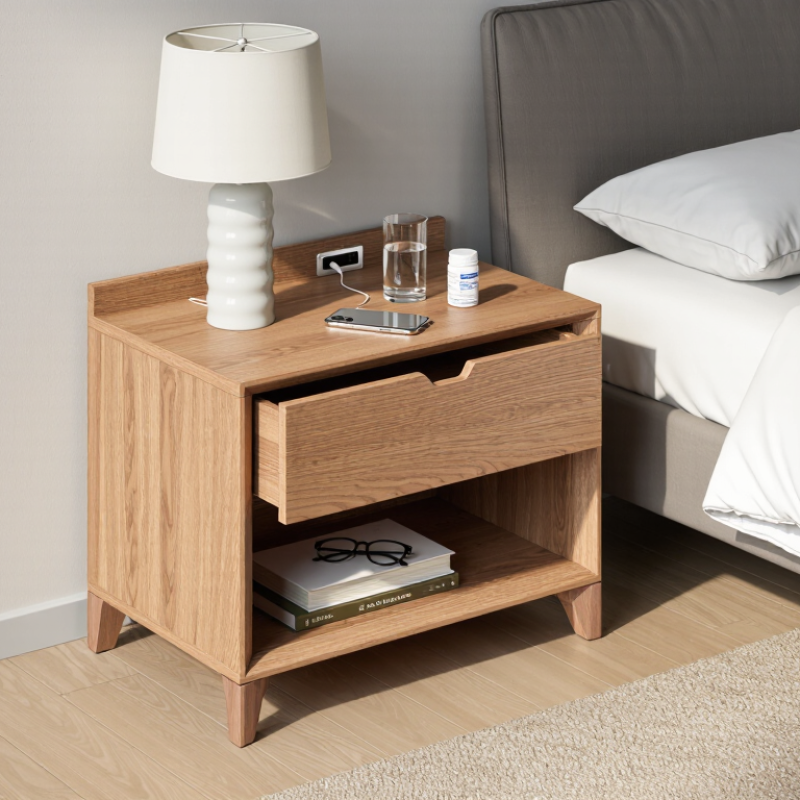
How to Choose the Right Bed Side Cabinet?

Define Your Bedside Storage Needs and Daily Habits

Choosing the right bedside cabinet starts with observing your real habits, not copying a bedroom photograph. What do you reach for after turning off the light? A book, reading glasses, water, tissues, or a charging cable? Place these items beside your bed for one evening. The result may surprise you.

Measure your available space carefully. Leave enough room for opening drawers and walking safely around the bed. If you read at night, choose a cabinet with a stable top for a lamp. If your phone stays beside you, look for a rear cable opening or an accessible shelf. Deep drawers suit private items, while open shelves keep frequently used objects visible. Avoid choosing storage that is too small. Clutter returns quickly.

Your habits can change, too. I once selected a narrow cabinet because it looked elegant, but the tiny drawer soon became crowded. That choice taught me to value daily access over appearance. Consider your height, sleeping position, and cleaning routine. A smooth, durable surface is easier to wipe, while raised legs help dust move underneath. Keep the cabinet close enough to reach, but not so close that it interrupts movement. Leave some empty space inside. It is practical, although I often forget this rule.

Measure the Available Space Around Your Bed

How to Choose the Right Bed Side Cabinet?

Measure the Available Space Around Your Bed

Before choosing a bedside cabinet, measure the floor area beside your bed. Do not rely on visual estimates. Measure twice.

Record the distance from the bed frame to the wall, wardrobe, door, and nearby furniture. A cabinet may fit its width but block a drawer or doorway. Leave enough walking space for comfortable movement, especially when carrying laundry or changing bedding. In many bedrooms, 60 centimetres feels practical, but your layout may require more. Check the cabinet’s full depth, including handles and open doors. These small details are easy to miss.

Measure the bed height from the floor to the top of the mattress. A cabinet close to mattress level usually feels easier to use at night. However, a slightly lower surface may suit reading lamps or personal preferences. Note the position of sockets, switches, skirting boards, and heating vents. A deep cabinet can cover a socket or interrupt airflow. That creates daily frustration.

I once planned a cabinet from the listed dimensions and forgot the skirting board. The cabinet technically fitted, but it sat forward from the wall. That mistake changed the walking path. Use masking tape to mark the cabinet’s footprint on the floor. Live with the outline for a day, if possible. Open the bed drawers and wardrobe doors during the test. A beautiful cabinet is not useful when the room cannot breathe.

Choose a Cabinet Style That Matches Your Room

How to Choose the Right Bed Side Cabinet?

A bedside cabinet should belong to the room, not merely fill empty space. I once chose a sleek cabinet for a warm, traditional bedroom. It looked attractive alone, yet felt strangely cold beside the carved bed. That mistake taught me to match the cabinet with the room’s strongest visual language.

Start with the bed frame, flooring, and wall color. A timber bed suits cabinets with visible grain, soft edges, or woven details. A metal frame usually works better with slim profiles and sharper lines. For a calm room, muted finishes reduce visual noise. For a plain room, fluted doors or brushed hardware can add texture without becoming loud. Keep the cabinet’s height close to the mattress, ideally within a few centimeters, so lamps and books remain easy to reach.

Scale also matters. Grand View Research estimates the global bedroom furniture market will grow at about 5.4% annually through 2030. More choices can encourage overbuying, though. Houzz’s 2024 U.S. Houzz & Home Study included responses from more than 30,000 homeowners, reflecting strong interest in personalized renovation decisions. Personal taste matters, but circulation matters too. Leave roughly 60 centimeters beside the bed when possible. I sometimes prefer a smaller cabinet with one drawer over a large unit that blocks movement. The room may look less impressive in a photograph, but it usually feels better at night. EPA guidance also supports choosing low-emission materials, especially in enclosed sleeping spaces.

Compare Materials, Features, and Storage Capacity

Choosing a bedside cabinet starts with its material, because the surface meets lamps, books, glasses, and occasional spills. Solid wood feels durable and can be repaired, but it may expand with humidity. Plywood usually offers good strength with less movement. Particleboard costs less, yet swollen edges can appear after water damage. Metal resists stains and supports a modern look, although it may feel cold beside a bed. I once chose appearance over moisture resistance. That decision was not wise.

Features should match your nightly routine. A soft-close drawer reduces noise during early mornings. Adjustable feet help when floors are uneven. Rounded corners are useful in narrow bedrooms, especially near children. Check the drawer runners by opening them fully; they should move smoothly without wobbling. Cable openings can keep charging wires organized, but oversized holes may collect dust. Small details matter.

Storage capacity needs careful measurement, not guesswork. Record the cabinet’s width, depth, and height, then compare them with your available space. A shallow cabinet suits a tight room, while a deeper model holds books and larger devices. Consider internal measurements too. A drawer may look spacious but lose room to thick side panels. One open shelf is convenient for daily items, while a closed compartment hides clutter. My first estimate was wrong because I measured only the outside. Leave enough clearance beside the bed for comfortable movement and easy cleaning.

Check Safety, Quality, and Overall Value Before Buying

Choosing a bedside cabinet starts with safety, not appearance. The U.S. Consumer Product Safety Commission estimated 84,100 furniture tip-over injuries from 2018 to 2020. A narrow cabinet can still become dangerous when drawers open fully. Choose a stable base, rounded corners, smooth drawer stops, and a wall-anchoring option. Test it beside your bed. Push it gently from different angles.

Quality appears in small details. Inspect the joints, drawer alignment, back panel, and surface finish under bright light. Solid wood may feel stronger, but well-built engineered panels can offer better value and consistent dimensions. Look for clear material information and test documentation referencing furniture durability standards, such as BIFMA performance methods. Avoid strong chemical smells. The U.S. Environmental Protection Agency identifies pressed-wood products as important indoor formaldehyde sources, so low-emission materials deserve attention.

Measure twice. A cabinet that blocks walking space creates daily frustration. Check its height against your mattress, especially if you use a reading lamp or reach for medication at night. Compare total value, including delivery, assembly, anchoring hardware, and warranty support. Cheap hardware often loosens first. That is my practical warning. I once trusted a beautiful drawer with weak runners, and the mismatch became obvious within weeks. Price alone is a poor quality test; independent reviews, transparent specifications, and repairable parts offer stronger evidence.

FAQS

How should I measure space for a bedside cabinet?

Measure from the bed frame to nearby walls, doors, wardrobes, and furniture. Measure twice. Include handles and open doors in the depth. Leave about 60 centimetres for comfortable movement when possible.

Can a cabinet fit beside the bed but still cause problems?

Yes. It may block a drawer, doorway, socket, or heating vent. Open nearby doors during your test. A cabinet can fit technically and still make the room awkward.

How can I test a cabinet’s footprint before buying?

Use masking tape to mark its full outline on the floor. Leave the outline for one day, if possible. Open bed drawers and wardrobe doors during testing. I once forgot the skirting board, and the cabinet sat forward.

What cabinet height works best beside a bed?

Choose a surface close to mattress height, usually within a few centimetres. This keeps lamps, books, and glasses easy to reach. A slightly lower cabinet may suit your reading habits. Personal comfort still matters.

How should the cabinet match my bedroom style?

Compare it with the bed frame, flooring, and wall colour. Timber beds suit visible grain, soft edges, or woven details. Metal frames often suit slim shapes and sharper lines. Attractive alone is not always attractive together.

Which materials are practical for a bedside cabinet?

Solid wood feels durable and may be repairable, but humidity can cause movement. Plywood offers useful strength with less movement. Particleboard costs less, though water can swell its edges. Metal resists stains but may feel cold.

What features are worth checking before purchase?

Test the drawer runners by opening them fully. Look for smooth movement and little wobbling. Soft-close drawers reduce early-morning noise. Adjustable feet help on uneven floors. Rounded corners suit narrow rooms and family spaces.

How much storage should a bedside cabinet provide?

Measure internal space, not only the outside dimensions. Thick panels can reduce usable drawer room. An open shelf keeps daily items visible. Closed storage hides clutter, but I sometimes underestimate how quickly it fills.

Conclusion

Choosing the right Bed Side Cabinet starts with understanding your personal storage needs and daily habits. Consider what you usually keep beside your bed, such as books, glasses, chargers, or medication, and decide whether you need open shelves, drawers, or a combination of both. Before shopping, measure the available space carefully, including the cabinet’s ideal height, width, and clearance around the bed, so it fits comfortably without blocking movement.

Next, select a style that complements your bedroom’s design, whether you prefer a simple, modern look or a more traditional appearance. Compare materials, construction quality, storage capacity, and useful features such as smooth drawer operation, cable management, or easy-clean surfaces. Finally, check that the cabinet is stable, durable, and made with safe finishes. Balancing appearance, practicality, quality, and price will help you choose a reliable piece that improves both bedroom organization and everyday comfort.


Sophia

Sophia

Sophia is a dedicated marketing professional with an exceptional depth of knowledge about her company's products and services. With a keen understanding of market trends and customer needs, she crafts insightful blog posts that not only inform but also engage readers, enriching the company’s online......